
- News
- City News
- chhatrapati sambhajinagar News
- Food and Drugs Administration keeps a tab on food quality
Trending
This story is from October 26, 2016
Food and Drugs Administration keeps a tab on food quality
| With Diwali just round the corner, the Food and Drugs Administration (FDA) has launched a special drive to check the quality of sweets at various shops in the city.
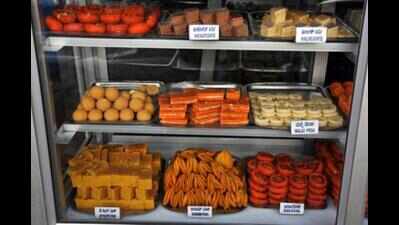
(Representative image)
Officials have also appealed to the citizens to make sure that they buy sweets and namkeens from only those shops where the FDA certificates on display.

Anand Pardhi, assistant joint divisional commissioner of FDA (food), Aurangabad, said, "The food safety officers are already on the job of collecting samples of sweets, which would be sent to the FDA laboratory in Pune and Aurangabad for analysis."
He said in a bid to keep tabs on the sale of adulterated food items, especially during the festival season, FDA officials conducted surprise checks at around 10 sweet shops in the city. "We inspected nearly 10 sweet shops and collected 12 samples of different sweets, five types of oil samples, 9 milk samples and other items such as sugar, sauce, asafoetida and varai," he said.
"As festivities are incomplete without sweets, citizens need to check the type of sugar used in preparing sweets as it plays a crucial role not only in taste but also on the toxicity of the final product. Most of the loose sugar we get are not refined using a sulphur- free process," Pardhi said.
Speaking about the use of mawa or khoya, which is basically dried milk used for making most of the sweets, he said, "Mawa has fat a content. If this content is not as per the prescribed standard limit, then such mawa cannot be allowed to be used. As per the standard, mawa needs to have minimum 30% milk fats. However, it is difficult to recognise pure mawa. It can be adulterated using sugar and even substances such as starch. Hence, registration or licensing of mawa shops has been made mandatory."
"As a precautionary measure, we have advised confectionery owners to prepare raw materials such as khoya, mawa and ghee themselves rather than buying it from other states. Most of the problems arise owing to inter-state export of products as we do not know how old these are," he said.
"Though the department has been short-staffed for some years now, with just 14 officials in the division and four in Aurangabad, it is taking all efforts to keep a strict vigil to avoid the sale of adulterated sweets. However, co-operation from citizens through alerts about possible adulteration could help us take more steps," Pardhi added.
End of Article
FOLLOW US ON SOCIAL MEDIA







Photostories

Hot Picks
TOP TRENDING
Popular Categories
Hot on the Web
Top Trends
Trending Topics
Diwali WishesDhanteras 2024Fake PaneerKarwa Chauth WishesSomy AliVicky Vidya Ka Woh Wala Video CollectionKarwa Chauth 2024Akash AmbaniAvinash MishraBigg Boss 18Kaun Banega Crorepati 16Shraddha KapoorVettaiyan CollectionBougainvillea Movie CollectionJuhi ChawlaLiam PayneTop Load Washing MachinesBest Premium LaptopsIntel LayoffsWordle Answer
Living and entertainment
Latest News
Pics: Hina Khan seeks peace at Haji Ali Dargah during her brave fight against cancerBest Watches for Men To Suit Every Style and OccasionMoody's assigns first-time Baa3 ratings to Bajaj FinanceEldeco: A Legacy of Excellence in Real EstateBigg Boss 18: Avinash Mishra evicted by housemates following major clash with Chum Darang; Eisha Singh and Alice Kaushik left stunnedWhen Ranveer Singh made a hilarious comment on Kareena Kapoor Khan, catching Karan Johar and Anushka Sharma off guardKarnataka NEET UG 2024 mop-up round provisional allotment withdrawn by KEA, revised result to be issued today: Check details hereWhen Deepika Padukone opened up about fame and money in Bollywood; Says, 'It’s easy to get carried away'Taylor Swift plans tribute to Liam Payne after his tragic death during final Eras TourVijay's 'Kaththi' and 'Mersal' re-release postponedKing Charles III's first visit to Australia reignites debate on ending ties to British monarchyHappy Diwali 2021: Best SMS, Images, Wishes, Facebook, and WhatsApp messages to send as Happy Diwali greetingsBigg Boss Tamil 8: VJ Vishal teases Dharsha Gupta over her Cooking, sparks emotional outburstKarwa Chauth moonrise time today, Puja timing and Puja Samagri'Unlikely I am going home': Bangladesh's Shakib Al Hasan on playing farewell Test in MirpurKartik Maas 2024 Start and End Date: Time, Puja Rituals and SignificanceStudent kills self in Kota, 15th this yr'Aaqib bhai, Pakistan cricket ko kya ho gaya?' Gautam Gambhir asked - Watch
Copyright © 2024 Bennett, Coleman & Co. Ltd. All rights reserved. For reprint rights: Times Syndication Service